
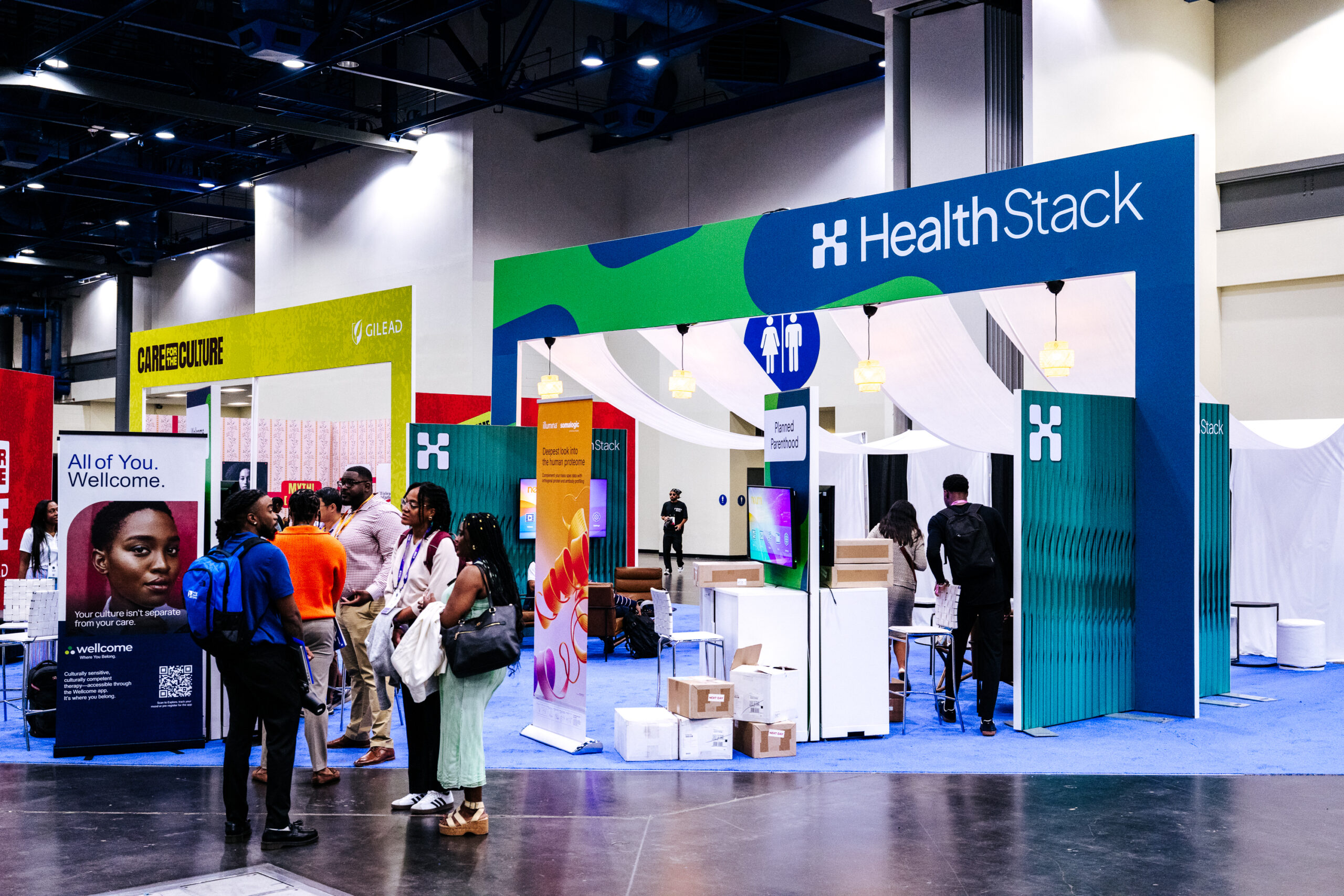
Ahead of the HealthStack Conference’s official kickoff, health care organizations gathered at the 2026 AfroTech Conference on Tuesday, Nov. 3 to connect attendees with resources ranging from free dermatology screenings and HIV prevention education to clinical research technology and culturally responsive mental health services.
As part of the HealthStack exhibition experience, health care companies, universities and community organizations showcased initiatives aimed at addressing disparities in care, increasing representation in medical research and making health information more accessible. While their approaches varied, the exhibitors shared a common goal. Ultimately, they wanted to ensure that advances in health care reach the communities that need them most.
Bringing Preventive Care Into the Community
For the African American Health Coalition, improving access to health care begins with meeting people where they are. The Houston-based nonprofit returned to AfroTech for its second year, partnering with pharmaceutical company Eli Lilly to provide free dermatology screenings for eczema, psoriasis and alopecia.
Through its Skin Deep Melanin Matters initiative, attendees could receive skin screenings, scalp health consultations and educational resources about common dermatological conditions. The coalition also offered information about recognizing skin concerns that may indicate underlying health conditions.
Jeanette Lestrapp, chair of the African American Health Coalition, said last year’s conference highlighted how financial barriers and scheduling conflicts prevent many people from accessing dermatological care. The organization also partners with Texas Southern University to offer community dermatology clinics, where patients may receive diagnoses and prescriptions, with services expected to resume in January.
Alongside the screenings, the coalition hosted a “Sips, Snacks & Selfies” experience featuring complimentary refreshments and a 360-degree photo booth, encouraging attendees to engage with its health education resources.
Texas Southern University similarly brought preventive care directly to attendees through its mobile health unit. The historically Black university showcased programs focused on cancer screenings, immunizations, chronic disease prevention and mental health resources.
Its presence included the Center for Transformative Health, College of Pharmacy and Health Sciences, counseling programs and community partner Harris County Public Health. A university representative emphasized that health outcomes are often shaped by neighborhood conditions, including access to medical services and nutritious food.
For Texas Southern, participating in HealthStack also meant ensuring historically Black colleges and universities had a voice in conversations about emerging health technologies and their effects on underserved communities.
Challenging Stigma Around Sexual Health
At Gilead Sciences’ Care for the Culture exhibit, HIV prevention education took a more conversational approach. Under the message “Zero Shame. All Facts,” the interactive installation recreated familiar living room settings where attendees could explore misconceptions about HIV, testing and prevention.
Visitors could complete a sexual health survey that included information about HIV cases in their communities based on ZIP codes. The initiative also focused on pre-exposure prophylaxis, or PrEP, medication used to prevent HIV infection.
Shanae Howell, an employee of biopharmaceutical company Gilead Sciences, said one common misconception is that PrEP is intended only for certain populations, despite its potential benefits for people at risk of HIV exposure.
The exhibit encouraged attendees to discuss sexual health openly with friends, family members and partners while challenging stigma surrounding HIV prevention.
By placing these conversations in culturally familiar settings, Care for the Culture aimed to make sexual health education more approachable, particularly for communities disproportionately affected by HIV.
Expanding Representation in Medical Research
Other exhibitors highlighted how emerging technologies could improve medical research and treatment development. Illumina and SomaLogic showcased technologies involving genomics and proteomics, fields that study genetic information and proteins to better understand diseases.
A senior solutions consultant at Medidata explained how these technologies can help researchers examine disease progression and support the development of diagnostic tools and treatments. Their presence at AfroTech also reflected an interest in engaging communities historically underrepresented in biomedical research.
Medidata, a global clinical research technology company, similarly emphasized the importance of increasing diversity in clinical trials. At its booth, representatives discussed how limited awareness and misconceptions can discourage Black communities from participating in medical research.
The company uses technology to support clinical trials and help researchers develop medications, vaccines and other medical interventions. A Medidata representative said the organization hopes to make clinical research less intimidating while increasing awareness of opportunities to participate.
The company also viewed AfroTech as an opportunity to connect with prospective talent and organizations working across the pharmaceutical and biotechnology industries. For both exhibitors, improving representation in research was a central part of their discussions about developing medical innovations that better serve diverse populations.
Making Mental Health Care More Culturally Responsive
Dr. Randi Nelson, CEO and medical director of Wellcome Care Medical, emphasized the importance of connecting patients with therapists who understand their cultural identities and lived experiences. The organization’s platform aims to make those connections easier through culturally responsive therapist matching.
Representatives explained that finding a therapist who understands a patient’s identity and lived experiences can be an important part of building trust. The organization’s platform aims to make those connections easier through culturally responsive therapist matching.
At AfroTech, Wellcome representatives also gathered feedback from attendees about their mental health needs and experiences, with the goal of using those perspectives to improve the platform. The organization’s approach reflects a broader effort to make mental health services not only available, but also responsive to the communities seeking care.
Across the HealthStack exhibition area, organizations demonstrated different approaches to addressing disparities in health care. From preventive screenings and HIV education to clinical research and mental health services, exhibitors highlighted the importance of connecting innovation with the communities it is intended to benefit.
As the HealthStack Conference begins Wednesday, Nov. 4, those efforts offer an early look at how organizations are working to make access, representation and community engagement central to the future of health innovation.

