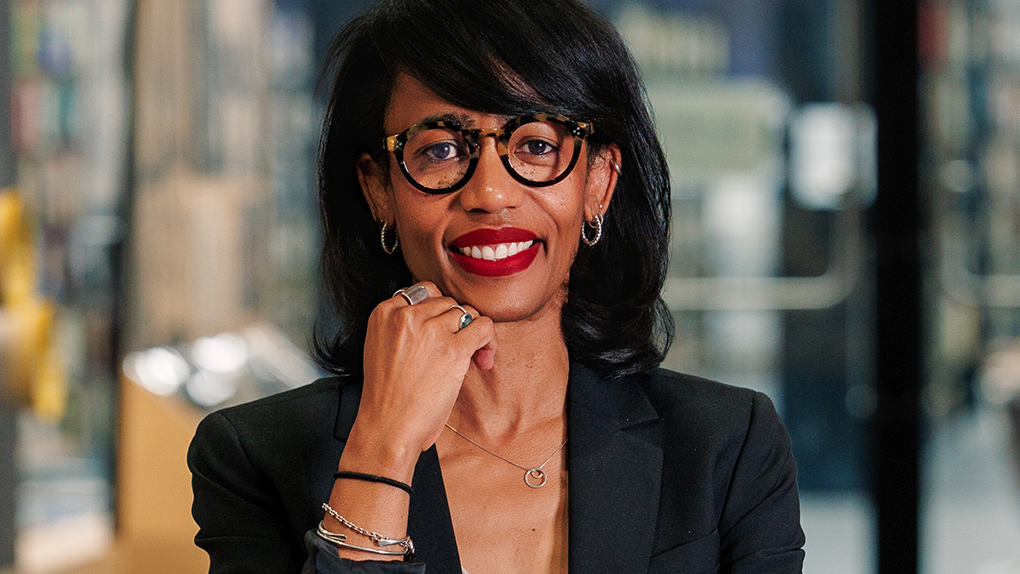
Erica Murdock never set out to become a venture capitalist.
However, today she leads Unseen, the venture arm of Seae Ventures, which is a top Black-owned early-stage healthcare venture capital firms.
Her rise in the industry comes as venture capital faces growing questions around representation, access and equity in funding. Murdock’s journey has largely been shaped by preparation and the courage to embrace uncertainty.
Early Career Path Setting The Foundation For Her Future
Murdock’s path to venture capital was anything but linear. Her career began with a focus on physiology and clinical research, with the goal of becoming a physician. However, her experience in a pediatric endocrinology lab changed the trajectory of her ambitions.
“I decided I didn’t want to become a doctor,” she tells HealthStack. “Then, I thought I would pursue a career in academia after I decided I did not want to be a clinician.”
From there, Murdock transitioned to research before moving into healthcare analytics. She began at Blue Cross Blue Shield of Michigan as an analyst. Then, Murdock spent a decade building healthcare operations expertise across payers and health systems.
“I’ve been around the block on the operating side,” she shares. “I’ve built, I’ve broken, I’ve fixed, I’ve done all the things.”
That operational experience ultimately became the foundation for her next chapter. When Seae Ventures approached Murdock about leading Unseen, she initially questioned whether she belonged in venture.
“My initial thought was, ‘I have no venture capital experience,’ ” she says. “Yes, I’ve fundraised. Yes, I had been part of teams responsible for fundraising, and I understood how VC worked. But I didn’t know if I was the right fit for this.”
On Perspective And Investing In Yourself
Murdock’s perspective shifted when she began to recognize the advantage of her operational background. The Seae Ventures team saw the value in her years spent building companies, navigating healthcare systems and solving real-world problems. They believed that experience gave her an edge that many traditional venture capitalists did not have.
“They were like, ‘You have years of something that no one can teach you,'” she says. “‘You’ve been in the weeds [and] you’ve been on the ground. You’ve built, you’ve broken, you’ve fixed, you’ve done all the things, and we think that’s invaluable.'”
That perspective led her to move forward while deepening her venture capital expertise. She immersed herself in the mechanics of investing, combining knowledge with the operational experience she had gained over her career.
A Seat At The Venture Capital Table
Murdock entered venture capital with a different perspective on the power of capital. She saw an opportunity to help determine which entrepreneurs and ideas get the chance to grow.
“Your perception of your investors is possibly not in line with what they’re actually doing on the back end,” she says, noting that the role of investors extends beyond writing checks.
According to Murdock, it’s a partnership.
“I try to work alongside my founders, and leverage my operating expertise as we think about how we support them more effectively,” she says.
For Murdock, a seat at the table means opening doors and opportunities for ideas that can shape the future of healthcare.
“Being on this side of the table is an opportunity for me to leverage capital as a means of pouring back into people” Murdock shares. “It means helping shape which ideas get the opportunity to become the future of healthcare.”
“I try to work alongside my founders and leverage my operating expertise as we think about how we support them more effectively and also how we think about the future of health,” she adds.
Her focus has largely been on investing capital toward historically overlooked health populations, such as women’s health and underserved communities.
“There is a gap that is worthwhile to bridge,” she says. “Investment can help accelerate change for women’s health, for people of color, for Black people, [and] for Indigenous people.”
Uncovering The Companies Built To Last
Murdock says the next healthcare breakthrough rarely begins with the technology. She explains it begins with the person building it.
As a venture capitalist at a pre-seed fund, she reviews companies long before they have years of revenue or market validation. She says each investment begins with the founder.
“Because I invest in pre-seed, the first thing we’re looking for is a founder who we believe can truly build and lead the company to what they say they can do,” Murdock says.
For her, the strongest founders are not just building technology. They are trying to reshape healthcare. She looks for entrepreneurs who understand the problem they are solving and have the resilience to navigate healthcare’s long development cycles.
“Healthcare rarely rewards shortcuts,” she says. “Regulations slow progress. Systems resist change. Adoption takes time.”
Her diligence often starts with a series of questions rather than answers.
“Is this a pain point that you’re solving for someone?” she asks. “Is this significant enough of a problem to be addressed with the solution that you’re building?”
The questions go beyond the product itself. Murdock wants to understand who will use it, who will pay for it and whether it can succeed inside the complexity of the healthcare system. Before investing, she returns to one central question: Does this solve a problem that truly matters?
How A Venture Capitalist Defines Value
Murdock believes AI has become ubiquitous in healthcare.
“Nearly every company we see has incorporated AI in some way into their solution,” she says. “The harder question is whether AI is creating real value.”
She describes a market where investors continue pouring billions into AI startups, often chasing the next breakout company. But, for Murdock, the technology itself is not enough.
“At what point does the hype around a company ‘Oh, we’re AI-native’ or whatever the hot phrase is not fetch a gazillion-dollar valuation?” she says.
Instead, Murdock looks for companies where technology creates measurable value by improving access, efficiency, patient outcomes or administrative workflows.
“We have to think more deliberately about what we’re investing in,” Murdock explains. “That means understanding not only what a company is building today, but whether it can endure as healthcare changes.”
For Murdock, the strongest investments are rarely the ones generating the most hype. They are the companies built by founders who understand the market, solve meaningful problems and have the conviction to build for the long term.

