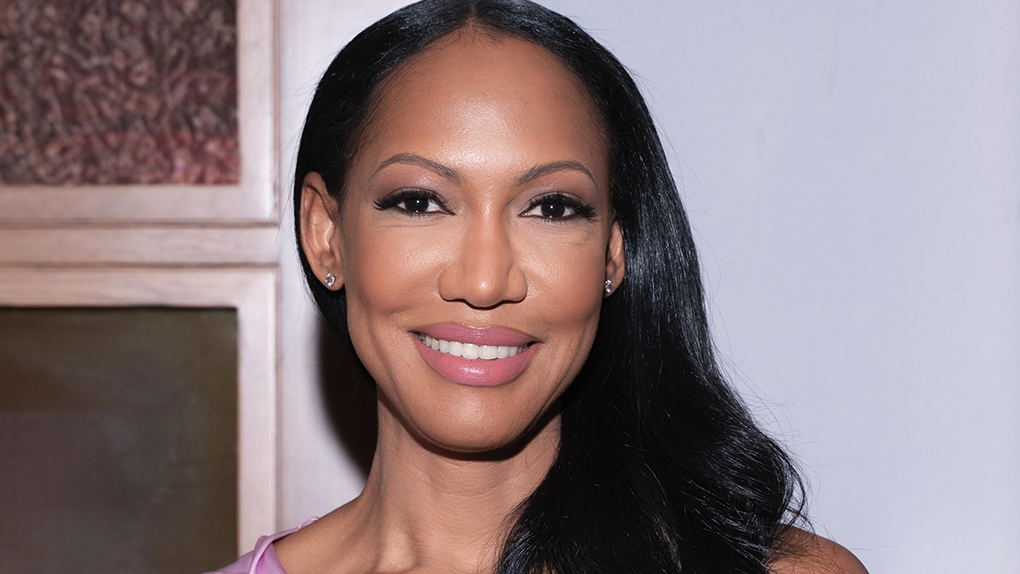
Dr. Judith Joseph has become one of the most recognizable mental health experts on Instagram and TikTok.
The Manhattan-based psychiatrist and researcher’s journey to content creation began when she posted short-form videos about mental health. Joseph’s following quickly began to build, gaining more than 1 million followers across her various platforms.
This year, she became the only physician included on the TIME100 Creators list, a recognition that reflects the unusual intersection of her work as a doctor, researcher and digital creator. While the recognition is appreciated, Joseph says her entry into the creator economy was solely driven by a desire to cut through the noise.
“I think there’s a real need to have credentialed experts online and on television,” Joseph tells HealthStack. “We see what’s happening right now with misinformation and special interest groups telling people about health when they have no actual training, true expertise. They’ve got opinions.”
That mission now defines her work, bringing evidence-based mental health information directly to the public.
Finding A Calling In Psychiatry
In the earlier days of her career, Joseph initially trained in anesthesiology and spent two years in the field before switching to psychiatry.
“I didn’t really find it very fulfilling,” she says of her decision to switch from anesthesiology.
Between that feeling and advice from several of her professors and mentors, Joseph ultimately decided to pursue psychiatry. She then followed it up with a fellowship in child psychiatry. Now, Joseph treats both children and adults while serving as a clinical assistant professor in the Department of Child and Adolescent Psychiatry at NYU Langone Medical Center and the NYU Child Study Center. Joseph is also an adjunct instructor at Harvard T.H. Chan School of Public Health and chairs the Women in Medicine Initiative at Columbia University Vagelos College of Physicians and Surgeons.
Joseph’s work in academia and her clinical practice opened the door to research that would become a defining threads in her career.
“I really wanted to make an impact and do research,” Joseph says. “The research that I do deals with coming up with different treatments for different conditions.”
That interest eventually led her to a question what she felt was missing from the conversation around depression.
“What happens when people don’t shut down?” Joseph questioned. “What happens when they over-function?”
The question led to a study on high-functioning depression, examining people who continue to work, care for others and meet expectations while experiencing symptoms of depression.
Uncovering Depression
Joseph’s research challenged a common assumption about what depression looks like. Rather than focusing on people who withdraw or stop functioning, she began examining those who continue to perform.
“According to the medical literature, by definition, major depressive disorder or clinical depression is supposed to lead you to either shut down, break down, stop functioning, or function less,” she explains. “But what happens when people don’t shut down? What happens when they over-function?”
Her study defined high-functioning depression as a pattern where people continue to meet responsibilities while experiencing symptoms of depression.
“What we found is that many people experience this because they may have something called high-functioning depression where they have symptoms of depression in the workplace and outside of the workplace,” she says.
Her findings also suggested that productivity itself can become a coping mechanism.
“What we found is that people with high-functioning depression cope by busying themselves,” she says. “When they sit still, they feel empty. When they are not working, they feel restless.”
For some, staying busy becomes a way to avoid confronting what they are feeling.
“They just can’t relax,” she shares. “We cope with our pain by constantly working or constantly finding something to do. They are people who keep moving because slowing down forces them to confront what they are carrying.”
Educating people about the disconnect between appearing highly successful, productive and capable and struggling with depression became central in her work.
Where Expertise Meets Influence
As Joseph’s research and clinical work expanded, so did her reach beyond the doctor’s office. She began teaching clinicians and practitioners how to use media to communicate with patients and educate the public about mental health.
When the pandemic hit in 2020, Joseph turned her attention directly to the public. She used her platform to spread truth as health misinformation and rumors appeared online. Joseph began creating mental health content for social media, an effort that quickly gained traction.
“During the 2020 pandemic, rumors and misinformation online. And I started creating this mental health content and it just kind of blew up, it really just took off,” she recalls.
Social media soon became an extension of Joseph’s clinical and educational work, reaching more than 1 million followers across platforms. As her audience grew, her interest in her research on high-functioning depression increased. This laid the foundation for her New York Times bestseller, “High Functioning.”
Expanding Beyond Mental Health
Joseph built her career and following around psychiatric care and clinical research. Increasingly, that work has led her into the broader field of women’s health.
Her research exposed medical care gaps women face when navigating life transitions. She also began to recognize how little training many physicians receive in menopausal health. The experience prompted Joseph to look more closely at the gaps in medical education itself.
“I think most doctors only get one class in all of their training, which is not enough,” Joseph explains. “And then, historically in medical research, women weren’t included in clinical studies until the early ’90s, so there’s just a lot that we don’t know.”
Joseph sought out additional training and guidance from colleagues.
“I had to reach out to my peers for advice to see where they were getting their credits, their continuing medical education information,” she says.
“It really was out of like a need to get more information for my patients,” Joseph continues. “And then it just kind of grew into this community now, where I work with other advocates to try to bring about awareness of these health issues, but from a mental health perspective.”

