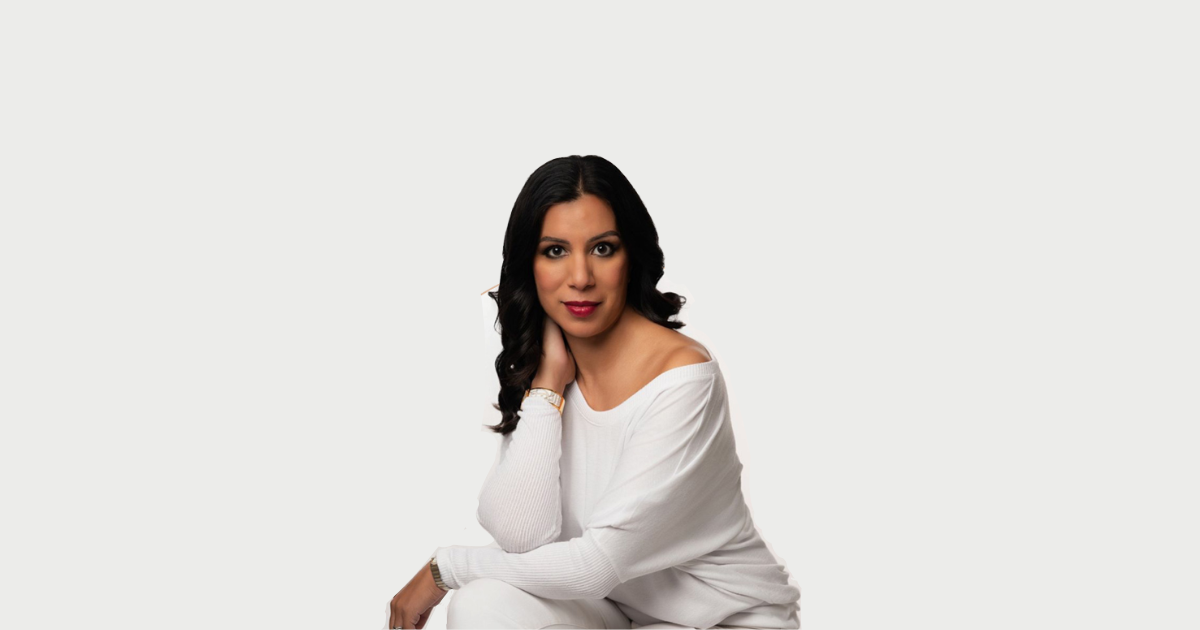
Board-certified cardiologist Dr. Ami Bhatt is driving the clinical transformation of wearable health innovation.
As a cardiologist trained at Yale, Harvard and Massachusetts General Hospital, Bhatt spent two decades with from patients at the bedside. In practice, she began to see the gaps in healthcare and began a focus on solving those problems with technology. Along the way, she amassed coveted titles, including Chief Innovation Officer at the American College of Cardiology. Now, she’s redefining the industry as WHOOP’s Chief Medical Officer.
“People sometimes assume a career like mine was mapped out in advance; it wasn’t,” Bhatt tells HealthStack. “Every move came from the same place: I kept noticing where care wasn’t reaching people, and I kept moving to fix it.”
Bhatt’s career has largely focused on a singular thread that has driven her progression. “Titles followed the problems for me, not the other way around,” she says.
“The honest answer is that you can’t plan a career like this. I’d venture to advise that you don’t want to over plan, because none of us could have predicted where medicine would be today,” she explains. “What you can do is follow the problem. Find the gap you can’t stop seeing and let that pull you forward.”
Her knack for problem solving propelled her through the ranks during her early practice days, taking on roles that gave her new angles to solve care gaps.
The Heart At The Foundation
The decision to study medicine was a simple one for Bhatt, driven by both curiosity and empathy.
“I became a cardiologist because I loved science and I loved people,” Bhatt says. “Cardiology let me do both.”
In medical school, the medical professional was fascinated by what was happening beneath the surface. She shares that her intrigue surrounding what was happening in the body and the story that the physiology revealed fueled her passion for the craft.
“When I got to medical school, I was drawn to the investigative side of medicine. What’s going on in the body, how is it happening, what’s the story the physiology is telling,” she says. “The heart turned out to be the perfect place for that curiosity. It’s measurable. It’s dynamic, and it responds to how a person actually lives: their sleep, their stress, their habits [and] their history.”
The science was only part of the draw for Bhatt. As she matured in medical practice, human connection and empathy increasingly shaped how she saw medicine. That connection became central to how she practiced.
“Early in my career I’d easily spend an hour with someone facing a hard decision. We would debate the options again and again. They had my cell phone number,” she shares. “I loved physiology and my patients were my friends. That’s not a decision as much as a calling.”
Healthcare Gaps Became Too Hard To Ignore
After practicing cardiology for decades, Bhatt says the care gaps became too loud and noticeable to ignore. She had seen how much could happen between appointments, even when patients received good care at both routine visits and at the bedside. It was then Bhatt realized incredible care alone couldn’t fill structural gaps.
“I was a cardiologist for over two decades, trained at MGH, Harvard, and Yale, and the longer I practiced, the more I saw the gaps,” explains Bhatt. “We had extraordinary tools and fifteen-minute appointments. We could treat disease well and still miss the months and years when it was quietly developing.”
This realization yielded a shift in thought that pushed her beyond the exam room and into innovation. In her role at the American College of Cardiology, she began working on discovering how technology could redesign healthcare. To Bhatt, the problem was not a lack of medical knowledge or technology. It was the limitations of a system built around episodic care.
“Healthcare has always worked in snapshots: a visit, a lab draw, a moment in time. Your body doesn’t work that way,” she shares. “Health develops continuously, and so does disease.”
Her work then expanded into digital health and policy. In her role as the inaugural chair of the Food and Drug Administration’s Digital Health Advisory Committee, she gained a broader view of what it takes to develop these tools responsibly.
A Natural Evolution Into Wearables
Bhatt describes her transition from the clinic into digital health as a natural evolution stemming from her passion for patients and heart health.
“WHOOP is the natural next step. For most of my career, I met people after something went wrong,” she shares. “Now, I get to work in the first mile of health, where continuous physiology can help people understand their bodies before they ever become patients.”
The CMO believes patients need more tools to help better manage their health as clinician workloads increase and personal touch points decrease.
“We have fewer clinicians caring for more patients, and a fifteen-minute visit once or twice a year is never going to capture how a person’s health actually unfolds,” says Bhatt. “I gave a TEDx talk years ago built around a phrase I still use: desperation is the mother of adoption. Healthcare doesn’t change because something new is available. It changes when the need overpowers the inertia. We’re there.”
That pressure, she describes, is also pushing wearables beyond personal wellness and into a more active role in healthcare.
“For most of medicine’s history, clinicians held the knowledge, and if we didn’t hand it to you, you didn’t have it. That era is over,” Bhatt says. “People want to understand their own bodies, their sleep, their stress, their recovery, and they’re showing up to appointments with months of their own data.”
“Some in my field see that as consumerism. I see it as patient agency, and it’s exactly what we should want,” she adds. “The devices didn’t create that desire, but they finally gave it somewhere to go.”
The Future Of Wearable Healthcare
Bhatt envisions a future where patients arrive at checkups with months of health data, along with questions and insights that can lead to better conversations, more informed diagnoses and stronger partnerships with their clinicians.
“This is the future I see: personal health that is always on, helping people understand how they feel, perform and age, while connecting naturally and responsibly to the clinical world when they need it,” she shares. “Health starts with the person, in the context of their everyday life.”
That vision defines Bhatt’s intentionality when creating WHOOP’s products. She aims to curate data and health literacy-focused designs to decrease the growing gap.
“A number that nobody understands helps no one,” she explains. “The real opportunity is to translate continuous physiology into something a person can actually use.”
“That’s health literacy built into daily life, and I’d argue it’s one of the most powerful clinical interventions there is,” Bhatt continues. “An informed person makes different decisions every single day.”
Despite the rise of independent consumer health tools, Bhatt is clear that technology cannot replace the human connection at the center of care.
“People don’t get healthy alone. They get healthy alongside the people who anchor them,” she says. “Clinicians remain the anchor. When you’re scared, when something’s wrong [or] when there’s a hard decision to make, you need a person. What changes is what you bring to that person.”
The future of health is not ultimately about collecting more data or chasing a longer life. It’s about getting to the heart of what drives each person to get healthy, then giving them the insights to spend more time doing what they love.
For Bhatt, who is driven by living longer for her daughters, that means building a product that makes room for the moments that make life worth living.

